How to Design & Build a Tennis Court: Costs & Considerations
-
Iron gates
January 18, 2024
Source: Pexels
If you play the time-honored game of tennis, invest in your own court. You won’t need to pay club fees, reserve your spot in advance, or travel back and forth to practice your swing.
Whether you want a luxurious tennis court in your backyard or add one to a rec center or country club, much planning goes into the process. Here’s everything you need to know to plan and build your tennis court.
“Planning your court carefully is the best way to use your budget effectively and prevent problems down the road.”
Essentials for Building a Tennis Court
Building a tennis court is not the same as hanging a basketball hoop in a driveway. There’s a lot to consider, including:
Topography and Feasibility
Planning your court carefully is the best way to use your budget effectively and prevent problems down the road.
You need to consider the soil, dominant winds, orientation of the playing field, and accessibility. If you’re using the court for a facility, consider any services you may need, like water, electricity, and water collection.
Orientation is a big part of the planning – you must factor in sun exposure and shade. It’s ideal for courts to be built from north to south to avoid players being blinded by the sun during matches. If you don’t have that option in your allotted space, plan to shield your court with shading structures, trees, or other sources of shade.
Ground Preparation
The ground for tennis courts needs to have maximum performance and drainage. It must be prepared for the court surface, which may require excavation. Otherwise, your court could be susceptible to water damage.
Surface Installation
There are plenty of options for your court surface, including:
- Asphalt: This is the most common surface for recreational courts, also known as a hard court.
- Clay: Tennis clubs usually install clay surfaces on their tennis courts.
- Grass or turf: Grass or synthetic grass may be seen at some tennis clubs.
- Carpet: Carpet is less common but still may be used for court surfaces.
- Acrylic: Though new, acrylic surfaces are becoming more popular for tennis courts.
Remember that each surface offers different advantages and disadvantages for playing style. For example, the grass is smooth and causes a ball to slide, while clay is “stickier,” keeping the ball on the surface longer and causing spin. The quality of the surface you choose will impact the quality of play.
Depending on the surface you choose, you may need draining or anti-shock underfelts, turf mantles, irrigation systems, or infills.
Complementary Structures
Once the court is planned, you must plan all the auxiliary structures. For example, you may want to add lighting to allow play in the evening, a judge’s stand for tournaments, or tension fabric structures for an indoor structure.
How Much Does It Cost to Build a Tennis Court?
Tennis courts cost between $5 and $14 per square foot installed. That puts the total cost for a 120-foot x 60-foot court between $40,000 and $100,000. Remember that the price can vary according to the surface you choose, the costs of the materials, the labor required, and any extras you want to add to enhance the space.
Tennis Court Dimensions
Technically, you can build a tennis court of any size to fit your yard or available facility space. But it’s essential to get the dimensions right if you want to practice on a court that’s up to international standards – or have your members practice on one.
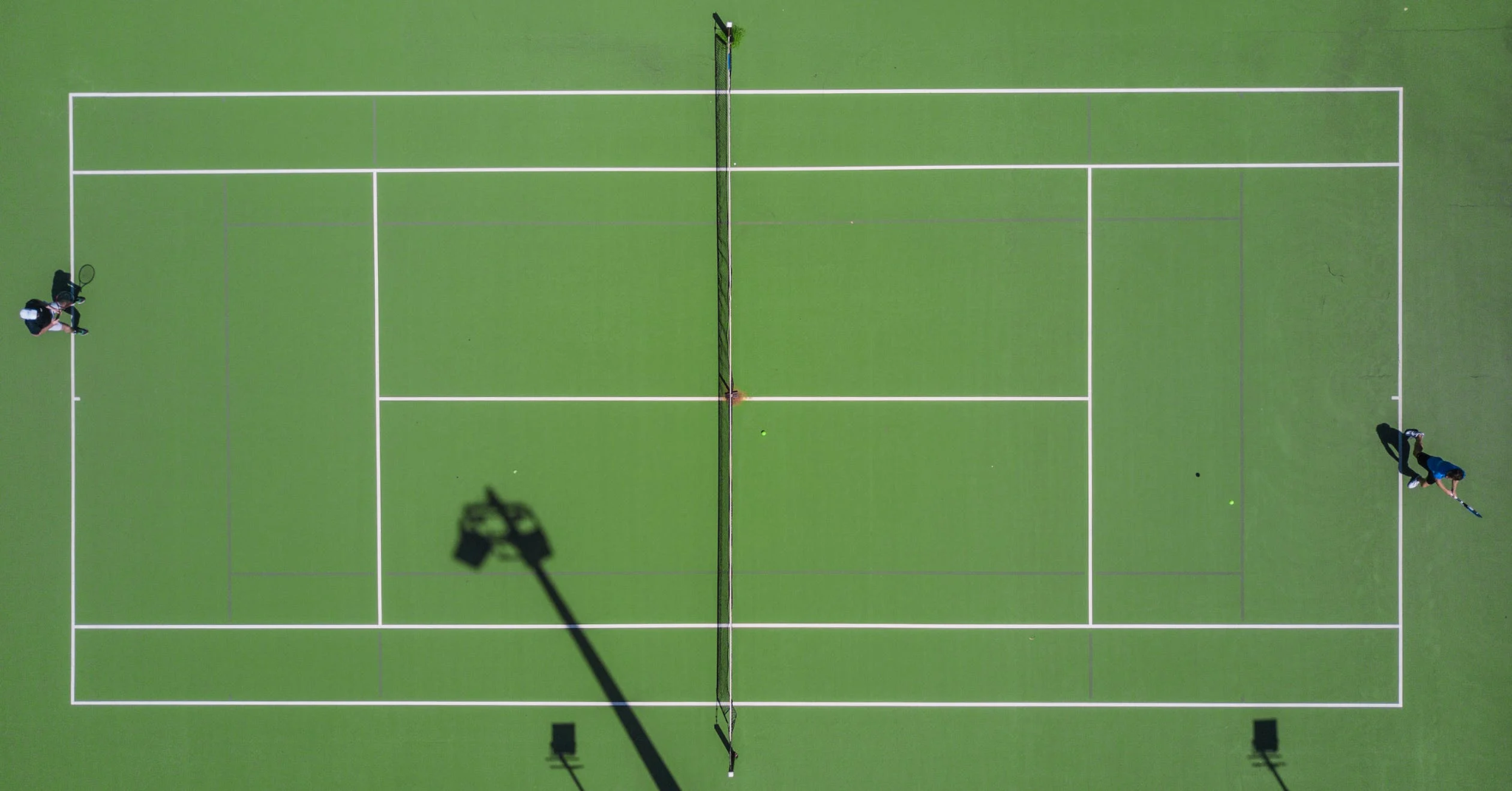
According to the International Tennis Federation (ITF) regulations, the dimensions of a standard tennis court play area are 78 feet long and 36 feet wide, leaving a total area of 2,808 square feet.
However, you need more space than just the playing area. The minimum suggested length of a tennis court is 120 feet, and the minimum suggested width is 60 feet, which is 7,200 square feet of total area for a single court.
If you plan to have tournament or stadium courts, add 10 feet to the length and width of the overall dimensions for player overrun, judges, and spectators. Consider leaving enough space along the sides and back of the court to the fence or backdrop.
For overhead space in indoor facilities, the minimum overhead clearance, free of obstructions, should be 20 feet above the baseline and 35 feet above the net.
Typically, the fencing or walls around the court are at least 8 feet for residential courts and 10 feet for clubs or park facilities. This includes the tennis court dividers and backdrops.
Tennis Court Fencing
If you’re building an indoor court, you won’t need to worry about landscaping or fencing. However, many residential and commercial tennis courts are constructed outdoors to take advantage of the natural light, nice weather, and beautiful views.
Fencing is an essential part of your court for a few reasons. It is a physical barrier to contain tennis balls and prevent accidents or injuries in the surrounding area. It also provides some privacy and wind protection for players and spectators.
You have plenty of options for tennis court fencing to suit your taste and budget. You can use traditional wood, economical chain link, sophisticated vinyl, ornamental steel, or a combination of materials to give your court the functionality and look you desire.
Ready to Build a Tennis Court? Northwest Fence & Iron Is Here to Help
Whether you want to build a tennis court in your backyard or expand public or private facilities amenities to include a tennis court, Northwest Fence & Iron is your top choice for a tennis court fence in Austin. We have years of experience with different types of tennis court fencing and tennis court fencing installation, so that we can bring your dream to life. Contact us today to discuss your project!
